The 2025 CBE Research Art & Image Contest Winners
Three research images were selected as winners of the 2025 CBE Research Image and Art Contest, all of whom were CBE graduate students.
First Place
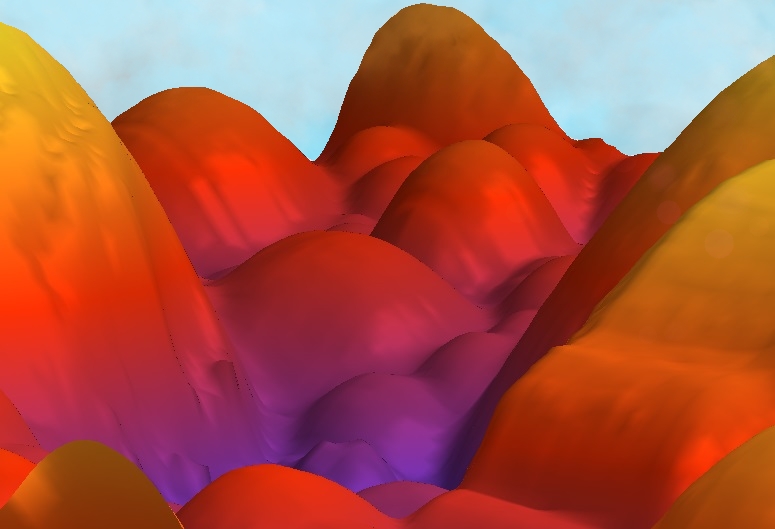
This is an AFM scan of a Hevea brasiliensis latex sample coated on a Silicon dioxide surface. This research focuses on the surface characterization of natural rubber latex, analyzing its physical and chemical properties to enhance performance and application potential. Additionally, this work explores alternative sources of natural rubber, such as the guayule shrub (Parthenium argentatum) and dandelion, to address supply security concerns in the U.S. By investigating these sustainable alternatives, this research aims to reduce dependency on traditional rubber-producing regions, ensure a stable latex supply for industrial and medical applications, and promote eco-friendly production methods. This work was supported by the TARDISS project.
2nd Place

This image is a dark-field optical microscopy capture of Polystyrene Soft Dendritic Colloids (SDCs), synthesized via a nonsolvent-induced phase separation technique. In this process, a colloid mill was vigorously rotated to induce strong turbulence, into which a polymer solution was introduced. The intense turbulence facilitated the stretching of polymer droplets during the entanglement and precipitation stages, leading to the formation of dendritic polymer structures. This method highlights a novel approach to fabricating dendritic colloids with potential applications in advanced materials.
Byeunggon’s research focuses on applying the shear-driven fabrication method to develop biopolymer composite films. He utilizes this technique to fabricate soft dendritic colloids (SDCs) and nanosheets. By incorporating SDCs and nanosheets, polymer films can be reinforced mechanically and their barrier properties improve. This approach can be used for the development of films that are biodegradable.
Third Place

This SEM image shows potassium bicarbonate shards on a flake of carbon nitride leftover from synthesis. Semiconducting carbon nitride is functionalized with a molecular catalyst in the photocatalytic reduction of CO2 to a liquid fuel product.
Congrats to Utathya, Byeunggon, and Hannah on their outstanding research images!
- Categories: