
- This event has passed.
Active Center Design on Bulk and Highly Porous Surfaces for Atom-Efficient Catalysis (Rachel Yang, Univ. of Michigan)
Abstract:
Catalytic materials, with active centers tailored to specific chemical processes, have evolved through advances in material synthesis, analytical techniques, and computational methods, leading to more diverse, complex compositions. Younger material classes like metal-organic frameworks (MOFs), biomimetic metal complexes, and tandem systems hold great promise, yet a gap remains in understanding how intrinsic properties of active centers influence key performance metrics, such as reactivity, selectivity, and stability. This gap stems from material complexity and the lack of effective kinetic descriptors, limiting the rational design of more efficient catalysts and adsorbents. This talk will explore how isolated metal sites within well-defined coordination environments can be systematically controlled, how dynamic these sites are under process conditions, and how governing material properties can be engineered to improve activity. To this end, we utilize rigorous spectroscopic and kinetic assessments to elucidate how material properties dictate molecular-scale behavior and to define reaction (and deactivation) mechanisms that inform a broader material and application portfolio.
Using crystalline MOFs (porous) and perovskite oxides (non-porous) as model materials with isolated metal sites in well-defined atomistic arrangements, we can exploit their tunable physicochemical properties to build robust structure-function relationships in catalytic applications. For example, we utilize probe reactions (e.g., hydrocarbon oxidations) on MOFs to unravel how metal identity and coordination environments affect reaction rates and product selectivity, with metal valency, electron affinities, and ligand effects playing key roles. Further, we examine site evolution and prominent deactivation mechanisms and by identifying underlying causes, propose mitigating strategies to improve material stability and atom-efficiency. Within perovskite oxide systems, ligation and coordination environment perturbation engender unique metal site identities that lower energy barriers and/or provide alternate lower energy reaction pathways for the conversion of conventionally thermodynamically stable molecules (e.g. methane, CO2) to valuable chemicals. Through these vignettes, we aim to apply chemical engineering fundamentals to uncover the mechanisms and limitations of promising solid catalyst architectures, guiding the future design of more sustainable catalytic systems.
Biography:
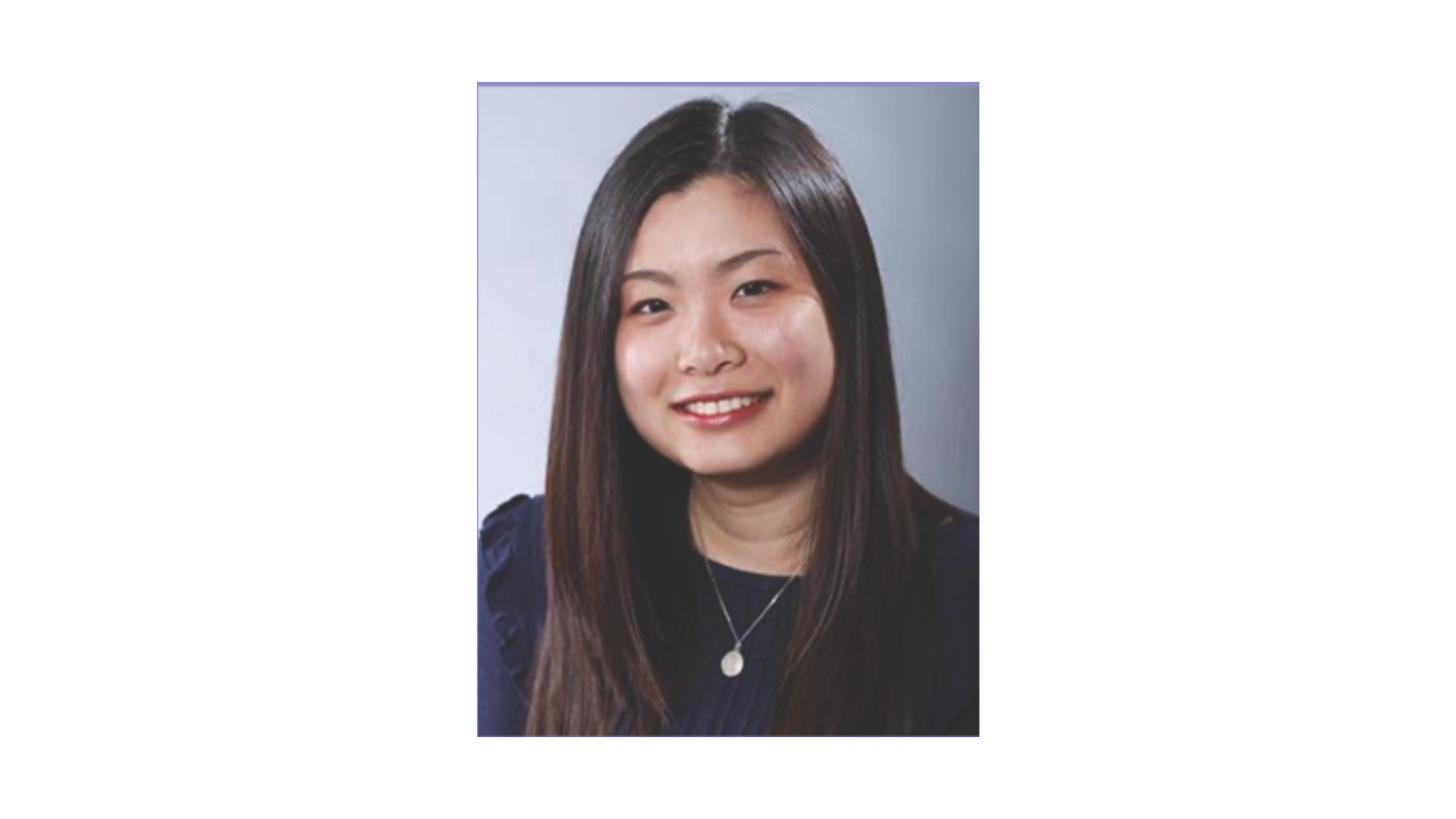
Rachel A. Yang is currently a postdoctoral research fellow in Professor Eranda Nikolla’s group in the Department of Chemical Engineering at the University of Michigan Ann Arbor. In 2024, she earned her Ph.D. from the Department of Chemical and Biological Engineering at Princeton University under the guidance of Professor Michele L. Sarazen.
Her dissertation work (Jui Dasgupta Outstanding Dissertation Award) focused on metal-organic frameworks (MOFs) as modular heterogeneous transition metal CO2 adsorbents and catalysts for selective oxidative chemistries that are ubiquitous in industrial chemical synthesis applications. Her research investigated green syntheses of earth-abundant transition metal MOFs and coupled spectroscopic methods with kinetic experiments to probe the evolution of key material properties and the implications for reactivity/capacity, selectivity, and material stability throughout catalyst/adsorbent life cycles. These works have resulted in 7 publications, over 30 conference presentations, and have been recognized by a variety of awards (27th NAM Kokes Award, CRE Student Award, CATL-ChemCatBio Graduate Student Award, SEAS Award of Excellence, Wallace Memorial Fellowship in Engineering).
Her current postdoctoral studies explore tailored synthetic techniques for doped perovskite oxide architectures with tunable properties (interfacial oxygen vacancies, metal oxidation states, etc.) for differing reaction systems, including hydrocarbon and oxygenate oxidation/reduction, plastics upgrading, and light-driven surface transformations (desorption). These research efforts have resulted in 2 publications (2 pending) and 9 conference presentations.